In order to understand the current situation of stress and anxiety among different age groups, we designed a survey. It included questions about the awareness and acceptance of the stress-relieving and anxiety-reducing effects of L-theanine.
The survey was conducted anonymously throughout the process, covering all age groups to ensure objectivity, comprehensiveness, and effectiveness.
Awareness of L-theanine across all age groups is generally very low. Only a very small number of respondents have a preliminary understanding through the internet, recommendations from friends, or popular science materials, and no one has a clear understanding of its stress-relieving and anti-anxiety effects. This lack of awareness has become a key barrier to promoting related products. At the same time, there are significant differences among groups in their willingness to try the product. For children, their willingness to try is highly polarized due to parental decision-making. High school and university students show higher willingness to try, middle-aged adults are cautious and observant, and older adults have the lowest willingness due to concerns about product safety. The main reasons for being unwilling to try focus on lack of knowledge about the ingredient, worry about side effects, no relevant need, and disbelief in the product's efficacy.
Safety is the primary concern when purchasing related products across all age groups. Natural ingredients, the absence of additives, and authoritative certification are also key considerations. Additionally, different groups have personalized requirements: children’s products need to be child-specific, suitable for their digestive systems, and have a friendly taste; students care about portability, cost-effectiveness, and beverage form; middle-aged adults focus on suitability for their body type, non-dependency, and maintaining health; older adults emphasize compatibility with existing health conditions, recommendations from authoritative institutions, and simple ingredients. Moreover, all groups have their regular ways of relieving stress, and their expectations for related products center around "fitting their own situations, being gentle without side effects, and specifically alleviating anxiety symptoms."
Overall, there is a certain market demand for L-theanine stress-relief and anti-anxiety products, especially among students and middle-aged working adults. However, market promotion must first address awareness and educational issues. Product development should focus on "safety, natural ingredients, and authoritative certification," while combining age-specific scenarios and usage needs for personalized design in order to enhance market acceptance.
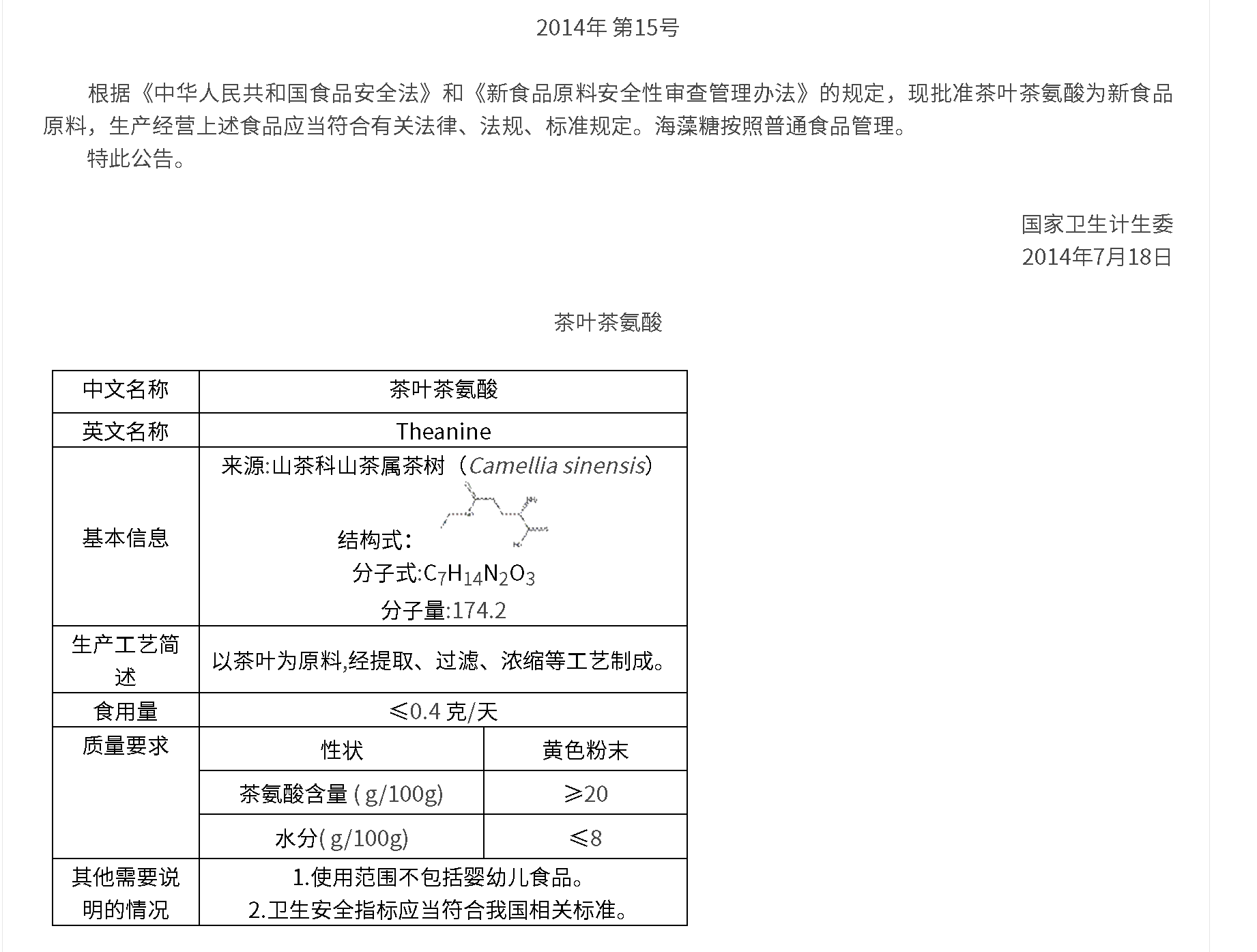
The national perspective on the importance of strengthening mental health:
Strengthen the construction and standardized management of the mental health service system. Increase public awareness and education on mental health, and improve mental health literacy. Enhance interventions for common mental disorders and psychological and behavioral problems such as depression and anxiety, and strengthen early detection and timely intervention for mental health issues in key populations. Improve the reporting, registration, treatment, and assistance management of patients with severe mental disorders. Fully promote community rehabilitation services for mental disorders. Enhance the capability and level of intervention in psychological crises during emergencies. By 2030, the prevention and treatment of common mental disorders and the identification and intervention of psychological and behavioral problems will be significantly improved.
Recent cases related to depression:
- Depressive disorders: From 1990 to 2021, the number of cases of depressive disorders in China surged from 34.4 million to 53.1 million, an increase of 54%.
- Anxiety disorders: In 1990, the number of anxiety disorder cases in China was 40.5 million, and by 2021 it had risen to 53.1 million, an increase of 31.2%.
- Age-standardized prevalence:
- Depressive disorders: From 1990 to 2021, the age-standardized prevalence of depressive disorders showed a declining trend, decreasing from 3,071.8 per 100,000 people in 1990 to 2,875.7 per 100,000 people in 2021, a drop of 6.4%.
- Anxiety disorders: The age-standardized prevalence remained relatively stable, at 3,412.3 per 100,000 people in 1990 and 3,481.7 per 100,000 people in 2021,
with no significant change.